
Digimon Story: Time Stranger Review

“Digital Evolution”
Introduction
When I was growing up, I won’t deny I was more of a Digimon fan than Pokémon—don’t hate me! The idea of traveling to a digital world and working alongside powerful partners that could evolve mid-battle was incredible as a kid, and my love for Digimon only grew as I got older. Unfortunately, my love for the games has been inconsistent, much like the seasons—they come and go. Some Digimon titles are phenomenal, like the original Digimon World, Digimon World Re:Digitize, and Digimon Story: Cyber Sleuth. That’s why I had high hopes for another entry in the series: Digimon Story: Time Stranger. Drawing inspiration from Persona 5, Pokémon, and classic JRPGs, this game promised to bring fresh energy to the franchise. Time to see if the digital and real worlds are worth saving again in my review of Digimon Story: Time Stranger for the PS5!
Gameplay

Digimon Story: Time Stranger surprised me from the start. Rather than opening with a lighthearted setup like most entries (aside from Digimon Survive), it throws players straight into secret organizations, time travel, and world-ending stakes. Beneath the sci-fi surface, it’s a classic JRPG—complete with dungeons, side quests, and of course, battling alongside your digital companions.
The game wastes no time getting started. Your character encounters an unfriendly Digimon and immediately gets partnered with a friendly one—think Pokémon—to fight back. Battles are turn-based, with standard options like attack, guard, special skills, or swapping Digimon. Initially, combat feels painfully simple, but after about 30 minutes, it opens up into a more tactical system. As usual, Digimon are categorized as Data, Vaccine, or Virus types, forming a triangle of strengths and weaknesses. Balancing your team is essential, and once you start unlocking new abilities and special team attacks, battles become much deeper and more rewarding.
One thing I loved: you don’t waste turns using items in battle. You can heal and still attack in the same round—a quality-of-life mechanic more JRPGs should adopt. You can also swap between six active Digimon mid-fight, allowing flexible team strategies. As your partners level up, they’ll learn new skills and eventually Digivolve. It’s a lot to take in, but once it clicks, it feels incredibly satisfying.
Outside of combat, you’ll spend time exploring cities, accepting missions, and managing your Digimon team. Recruitment is simple and addictive—you acquire new Digimon by scanning their data in battle, then converting that data into full partners after enough encounters. Before I knew it, I had nearly 25 Digimon in my first hour! You can raise them through training, personality conversations, or sending them to a Digi-Farm for independent growth. How you nurture them affects their evolution paths, adding depth to every choice.
In addition to your Digimon’s progression, your own character levels up too. While you can’t fight directly, your skill tree affects your team’s stats and your Agent Rank, which determines which evolutions are available. Want a Greymon or Angemon? You’ll need to hit Rank 3 first. Thankfully, experience gains come quickly, and there’s even an EXP dungeon for faster grinding. Overall, Digimon Story: Time Stranger offers surprisingly deep gameplay that feels designed for modern JRPG fans rather than just kids—and I absolutely loved that.
Graphics

Digimon Story: Time Stranger lands somewhere in the middle visually—good but inconsistent. On the positive side, Digimon and character models look great, cutscenes are often stunning, and environments—especially real-world Tokyo districts like Akihabara—are rich with detail. However, the dungeons can feel plain and repetitive, and some attack animations are overused. While not terrible, these small shortcomings make the game feel a bit less “next-gen” than it could be. Still, the overall art direction shines, and the Digital World in particular looks fantastic in motion.
Sound

Okay, call me a sucker for nostalgia—but when I saw the optional anime music pack on PSN, I bought it immediately, no questions asked. The base OST is already excellent, but being able to customize it takes things to the next level. You can change tracks for battles, boss fights, and menus. I had “Brave Heart” from the Digimon Adventure movies set as my boss theme, and it was perfect. More JRPGs should offer this kind of customization—it’s a small but meaningful feature that really enhances the experience.
Story
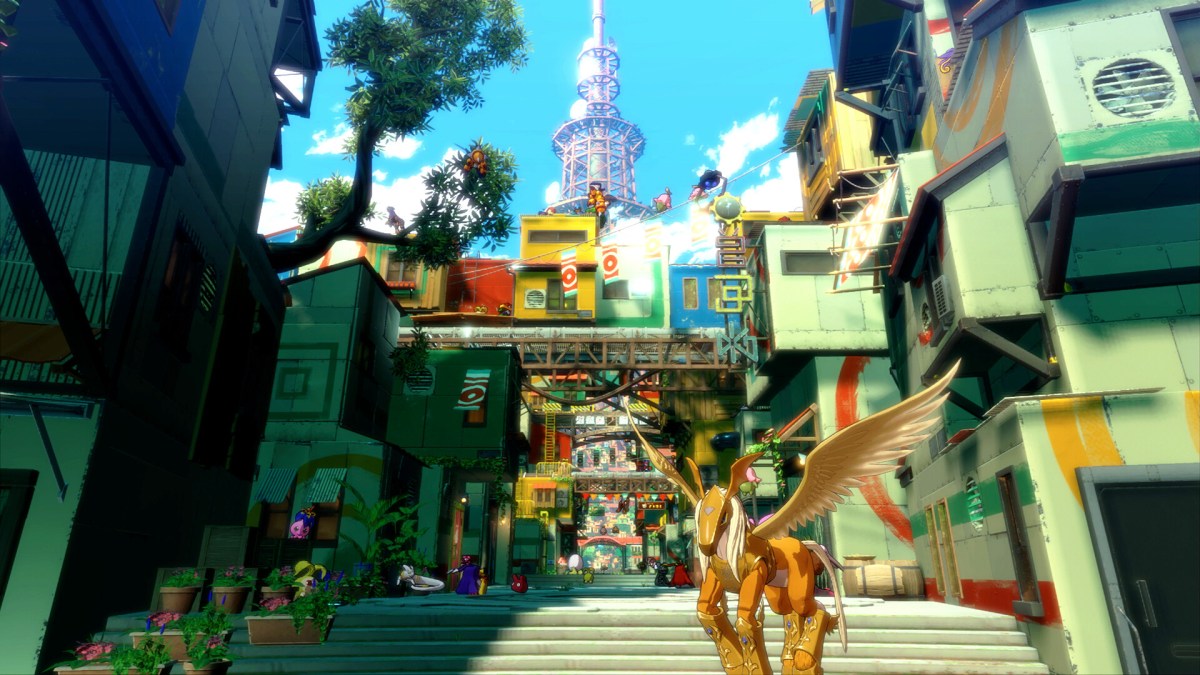
The story follows your choice of a male or female protagonist, both members of ADAMAS—a secret organization that deals with strange anomalies across Japan. Your agent is sent to investigate a mysterious event tied to digital entities, which soon leads to the discovery of Digimon. Without spoiling too much, things escalate quickly, and you find yourself thrown years into the past, tasked with saving the future with the help of your partner and the other agent (the character you didn’t choose).
As a longtime fan, I appreciated how Digimon Story: Time Stranger captures the spirit of the original anime while embracing a darker tone. The characters, world-building, and emotional stakes all feel substantial. I genuinely cared about the cast—something I can’t always say for this franchise—and the time travel element adds an engaging twist that makes the narrative feel bigger and bolder.
Overall Impression
I went into Digimon Story: Time Stranger blind—no demo, no trailers—and came away impressed. It’s a great JRPG with a few small annoyances, but nothing major enough to ruin the fun. Even non-fans of the series will find plenty to enjoy here, from the addictive leveling systems to the massive roster of Digimon to collect and evolve. I can already tell I’ll be playing this far longer than I should, just to build my perfect team.
Pros:
- Engaging and flexible leveling system
- Hundreds of Digimon to collect, evolve, and train
- Customizable OST with anime music options
Cons:
- Repetitive sound effects for chests and items
- Too many Digimon share the same voice lines
- Can feel overwhelming due to deep progression systems
Overall Score
8.5
Conclusion

Digimon Story: Time Stranger sets a strong foundation for the series moving forward. With deep gameplay, a mature story, and an impressive amount of content, it’s easily one of the best Digimon games in years. While a few issues—like reused animations and minor sound quirks—hold it back from perfection, the overall package is fantastic. If future installments build on this formula and polish the visuals, we could be looking at the definitive modern Digimon experience. For now, Time Stranger is a must-play for fans and a great entry point for newcomers alike.
—Aaron



Time travel in a Digimon game sounds so cool, how does it impact the story? 🤔
no spoilers but I think they do a smart job with the time travel element here. It makes for a smart story ^_^