Brain Damage Manga Review – A Horror Anthology That Disturbs

Horror is Weird, Strange, and Intriguing
Introduction
If you are a horror genre fan, you know people have very different opinions on what horror is. Some might be terrified of killer clowns (I hope some get that reference), while others are horrified by zombies. We all have unique tastes, and our fears mirror that. That’s why I can’t always say a horror story scared me if it didn’t. Then you have mangaka like Junji Ito, who has perfected the concept of manga horror with stories that blend reality with the supernatural. Many have copied his style, often with mixed results.
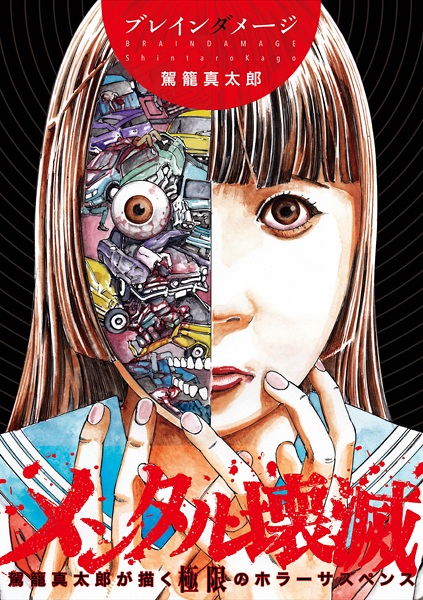
Enter Brain Damage by Shintaro Kago, a work that feels like an homage to Junji Ito yet remains something quite… different. Was Brain Damage a good read, or did I experience a new type of horror while reading it? Let’s find out in my review of Brain Damage. Please note that I’ll be reviewing all four stories as one but will highlight key aspects of each.
Art Style
One thing shared between all four stories is the art style, which feels like a Junji Ito work—and that is high praise. I loved the sometimes disturbing and off-putting art that made each story feel strange and unsettling. From weird to sometimes incestuous scenes, Brain Damage shocked me by often having art that just made me go, “eww.” That isn’t to say the art is bad—on the contrary, I loved the detailed panels that made some moments even more shocking. Don’t be surprised by how disturbing the visuals in Brain Damage can get.
Stories & Characters
Okay, let’s break this down by looking at each of the four stories individually.
- Labyrinth Quartet – The first tale follows four similar-looking women who wake up in a strange labyrinth, only to discover a killer is on the prowl. Ironically, this was my least favorite of the four stories. It’s a simple premise—girls who look alike get kidnapped by a psycho who, of course, has a bizarre reason for his actions. The story has potential, but it only becomes truly interesting near the end.
- Curse Room – This wasn’t my favorite either, but it felt the most like a true horror story. It follows a young woman seemingly losing her mind as she’s placed in a literal hell. I appreciated the themes and liked the ending, which elevated the story.
- Family Portrait – This was my favorite, and it felt the most like a Junji Ito story. It’s also the nastiest. A young family starts losing body parts and learns it might be connected to their grandfather. There are some seriously sick moments in this one—seriously sick—but the creeping horror is the most effective.
- Blood Harvest – The strangest of the four stories, but also the most intriguing. Our protagonist is caught in a traffic accident and soon realizes that everyone around her has died—except her. Worse, each corpse shows signs of different causes of death, making the entire accident feel supernatural. The ending was satisfying, and I loved the constant feeling of surprise while reading.
All four stories are a mixed bag, but they succeed in being unsettling rather than outright terrifying—which, to me, is a great form of horror. The feeling of discomfort and disgust is something rarely explored in horror, and when done like this, it reminds me that horror manga can still deliver strong results.
Pacing
Here’s where Brain Damage is both good and bad. The good? Each story builds toward a strong ending. The bad? They all follow the same pattern. I found myself more engaged near the conclusion of each story, but rarely did I love the beginnings. The setups often felt weak, and the stories took time to reach their best moments. The pacing works, but the formula becomes predictable.
Panel Layout & Flow
Brain Damage excels in its panel layout. The flow is easy to follow, and no panel feels overcrowded. I also appreciated that there was always something happening in each panel, which is rare for horror manga.
Themes & Tone
Without spoiling too much, I’ll say this—Brain Damage surprised me with disturbingly relatable real-world themes. Family Portrait, for instance, has a hidden meaning beyond its grotesque surface. Across all four stories, real-world issues lurk beneath the horror tropes and clichés. It took me a couple of reads to recognize them, but I enjoyed this subtle layer of storytelling.
Pros
- Unsettling, creepy, and downright odd art style—perfect for horror.
- Stories are original and subvert expectations.
- Different horror styles in a single collection.
Cons
- Characters are forgettable.
- Horror is subjective—not all stories will resonate.
- Most stories take too long to reach their strongest points.
Overall Score
7.0
Conclusion
Brain Damage is a solid horror manga anthology, even if it isn’t perfect. Some may find it terrifying, while others might not. If you read Brain Damage, you’ll likely enjoy at least one of the four stories. Go in expecting something unique rather than a Junji Ito clone, and you may walk away pleasantly surprised.
—Aaron