
Dongji Rescue Review
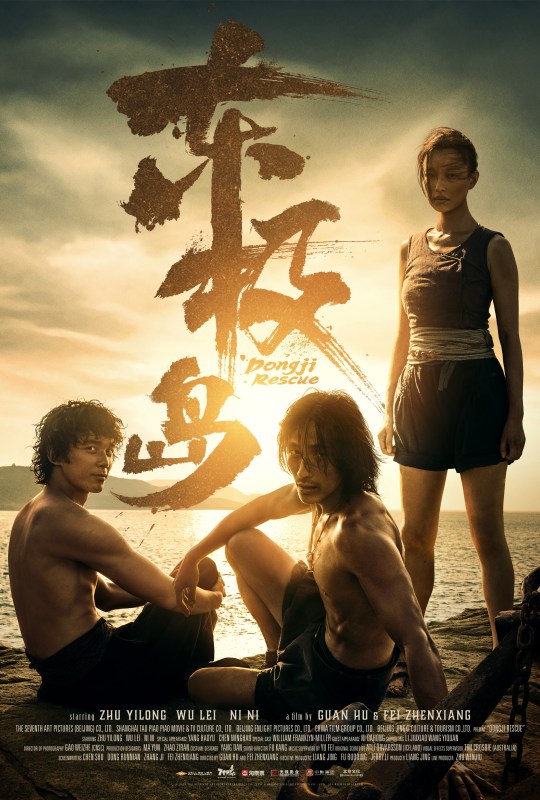
“Unsinkable heroes”
Introduction
What I love about Well Go USA is they produce quality, often hidden gem, foreign films. Whether fictional or based on historical incidents, Well Go USA isn’t afraid to show the world that movies can be made anywhere, not just here in the States. Enter Dongji Rescue, a historical film based on the Lisbon Maru Incident that took place during WWII. A Japanese ship filled with British POWs and a group of Chinese fishermen sounds like an intriguing premise, but is this a historical tale that needed to be told? I’m about to find out in my review of Dongji Rescue! Big thanks again from SunsetNerdVerse to Well Go USA for the review copy!
Story

Our tale begins with an introduction telling us that on September 27th, 1942, the Lisbon Maru, a Japanese transport ship carrying 1,816 POWs, left Hong Kong heading to Japan. An American submarine, the USS Grouper, unaware there were POWs on board, struck the Maru a few days later on October 1st. The Lisbon Maru began sinking near a small Chinese island, Dongji Island. That same island was once a peaceful land until Japanese forces consumed it and forced those who once sailed to remain landlocked. This became the new normal for the people of Dongji Island until two “brothers” (Ah Bi and Ah Dang) witnessed the sinking themselves and changed the course of history.
The first half of the movie does an incredible job avoiding unnecessary backstory and historical reminders. Yes, we get times and dates, but the film doesn’t linger. Within minutes, we’re thrown into the Lisbon Maru incident itself. Instead, we see the brothers find one of the POWs thrown from the ship after the explosion. Despite the older brother not wanting to get involved, the soldier tries to tell the younger (Ah Dang) what is happening. Because of the language barrier, Ah Dang doesn’t understand. This leads to a strange montage where the soldier shows him various items, plays with him almost like he’s a child, and talks about missing his family and hoping to rescue his fellow soldiers. I understand the language barrier and the attempt at peaceful rapport, but it could have been handled a bit differently.
Luckily, the rest of the introduction shows how the islanders—both native Chinese villagers and Japanese soldiers—treat one another. Despite Ah Bi’s desire to keep Ah Dang out of danger, the younger brother has a righteous heart and wants to help despite fear and uncertainty.
It takes about an hour for the movie to truly become serious. This is as far as I’ll go spoiler-wise—I recommend watching the movie for this unseen historical tale—but I became quite invested once the drama escalated. Dongji Rescue may feel restrained in its first half due to the setup, but when it escalates, it transforms into a serious drama that leaves you breathless. I won’t deny that a few moments had me gaping in surprise.
Be sure not to skip the credits. There are extra scenes that show real stories from the incident. I always appreciate when a historical film does this. It reminds the viewer that this wasn’t made simply as an extravagant film, but to showcase history at both its darkest and brightest moments.
Acting and Cast

I often feel foreign films can’t be assessed the exact same way as a typical USA movie. That isn’t because they are radically different, but because the acting style can feel different and might not immediately resonate with American audiences. This is especially true in a historical piece like Dongji Rescue, set in a fishing village far removed from major cities. The acting must match the setting, and for the most part, it does.
Zhu Yilong (Ah Bi) does a great job portraying the older, sometimes stricter brother who simply wants to protect Ah Dang (Leo Wu), knowing he’s immature and rash. Both actors capture the villager-like persona convincingly and rarely deviate from it. Dongji Rescue also features other notable performances, including Willam Franklyn-Miller as POW Thomas Newman and Ni Ni as Ah Hua, Ah Bi’s love interest who does not want to leave the island. They each have moments to shine—especially Ni Ni near the finale—but this story feels driven more by its narrative than by any single performance.
That doesn’t diminish their acting. The cast delivers powerful performances, but don’t expect one breakout role to dominate the film outside of the brothers and select side characters.
Cinematography and Direction
I didn’t initially know much about the production behind Dongji Rescue, but after watching and reading more about it, everything made sense. It reportedly took several years to build ships using traditional methods, and that effort shows. The ships and backdrops feel time-accurate and impressive. Dongji Island looks pulled straight from history, and even the villagers’ movements and behaviors reflect the era well. Dongji Rescue has several large-scale cinematographic moments, and I appreciated all of them.
Direction-wise, Dongji Rescue performs well overall. Directors Guan Hu and Fei Zhenxiang know when to focus tightly on characters and when to let scenes breathe. At times, I did wonder whether a few early scenes could have been trimmed to help the pacing. Still, once the drama intensifies and the camera captures the chaos and horrors of WWII, the film shifts into something far more gripping than its opening suggests.
Pros
- An unseen part of WWII that allows a fresh historical story to be told
- Amazing attention to detail from the replica ships to the scenery shots
- Main actors do an incredible job capturing the feeling of WWII villagers
- Slow start, but once it builds, it becomes visceral and immersive
Cons
- Some goofier early moments feel oddly placed
- Side cast doesn’t get much time to shine due to the narrative focus
- Takes about an hour before the emotional weight fully hits
Overall Score
8.5
Conclusion
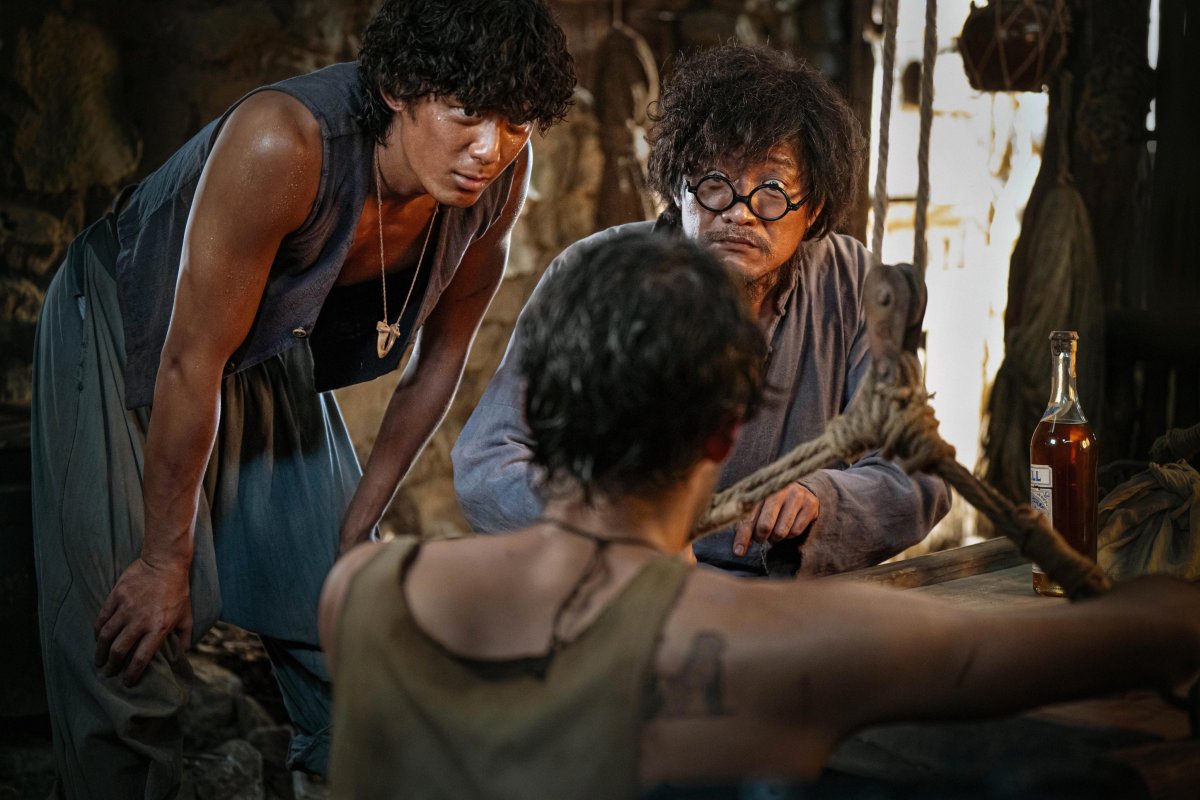
Dongji Rescue may start slowly, but once that first hour passes, what follows is a non-stop drama that hits emotionally and doesn’t let go until the credits roll. I had never heard of this historical tale before watching Dongji Rescue, but afterward, I genuinely wanted to learn more—which is always a sign of a strong historical film. In many ways, Dongji Rescue isn’t about individual performances but about a well-told narrative that reveals yet another unseen side of WWII. It’s an excellent film and one you’ll want to watch when it releases digitally on February 24th.
—Aaron


